0

A Complete Guide to Accounts Receivable CPE |
| The Last Self-Study CPE Website You Will Ever Need (Click for Subscriptions) |
This page explains what accounts receivable CPE covers, why it matters for cash flow and risk management, and the benefits of self study accounts receivable courses.

Running a business well always comes down to effective cash flow management. When money comes in steadily, it can grab growth opportunities and keep vendors and customers happy, too. But to achieve these, its accounts receivable processes have to run smoothly. If you are a CPA or work in accounting and are handling AR processes, pursuing accounts receivable CPE can strengthen how you manage these processes.
Whether you want to learn accounts receivable for CPAs, accounts receivable for CFOs, or accounts receivable for accountants, this guide lays out what you need to know. It's designed to boost your knowledge of every crucial aspect of CPE in accounts receivable, helping you elevate professional competence and become a valuable asset to your company and your clients.
Let's begin with the basics.
Accounts receivable is basically the money a business is waiting to collect from its customers and clients, and it's a big deal for maintaining cash flow and financial health. For CPAs and other accounting professionals, knowing how to handle AR processes isn't just about crunching numbers. It's also about keeping the company's financial health steady.
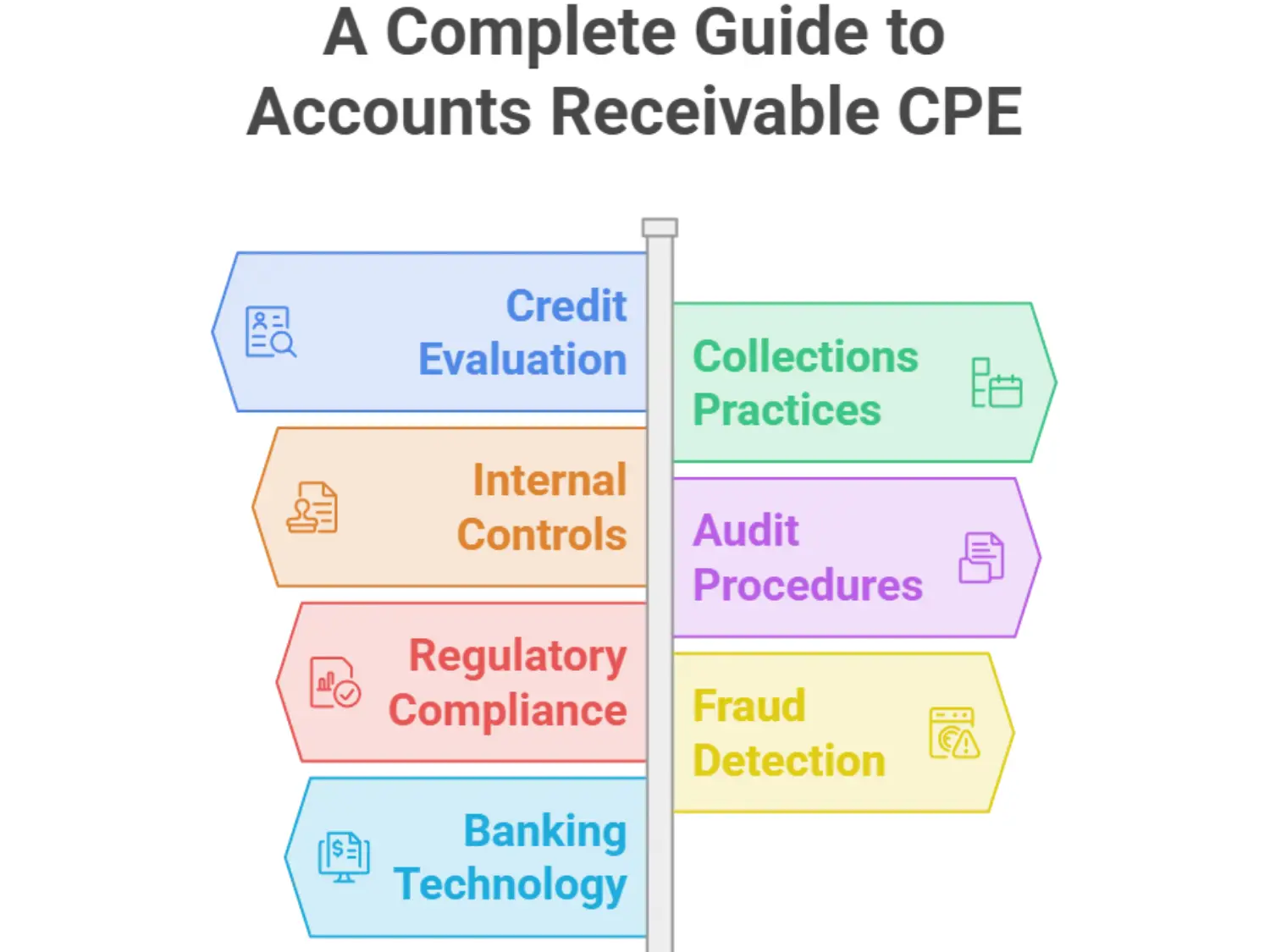
Accounts receivable CPE is all about structured continuing education focused on AR processes. These programs teach you how to size up credit risk, handle collections, make sure your company is compliant, and get ready for audits. The better the CPE provider, the more likely you'll stay up-to-date with the latest accounting standards, regulatory requirements, and technological advancements. You end up learning strategies to manage receivables that actually help the business grow and handle bumps in the road.
At the end of the day, signing up for quality accounts receivable CPE online or offline programs isn't just about fulfilling a requirement. You actually come away knowing how to optimize cash flow, cut down on risk, and boost the company's overall performance.
The right CPE courses in accounts receivable help you strengthen these critical functions.
Both accounts receivable CPE online and in-person courses are structured to provide you with both technical knowledge and real-world applications. These are the primary areas of focus of these courses. Note that the actual learning outcomes cover many more topics in addition to the ones mentioned here.
Objective: Teach you how to evaluate customer creditworthiness before extending credit terms.
Learning Outcomes: Credit scoring models, ratio analysis, and external reports.
Objective: Improving efficiency in securing payments while maintaining strong customer relationships.
Learning Outcomes: Structured collection policies, automated reminders, and escalation procedures.
Objective: Protecting receivables against misstatements and fraud.
Learning Outcomes: Reconciliations, segregation of duties, and proper approval workflows for write-offs.
Objective: Preparing professionals to efficiently manage AR processes that can withstand scrutiny.
Learning Outcomes: Maintaining fully executed contracts, sales orders & purchase orders, proof of delivery, and customer confirmations.
Objective: Ensuring receivables reporting adheres to GAAP, IFRS, and local regulations.
Learning Outcomes: Proper documentation, allowance for bad debts, and disclosure of doubtful accounts.
Objective: Identifying and preventing fraudulent activities in AR processes.
Learning Outcomes: Methods to identify red flags like unusual payment patterns, unauthorized write-offs, and fictitious invoices.
Objective: Leveraging automation and digital tools to strengthen and streamline processes.
Learning Outcomes: E-invoicing, integrated payment solutions, and advanced analytics to optimize processes.
If you want to maintain an active CPA license and stay current with the latest standards and rules in AR practices, pursuing accounts receivable CPE is a practical option. While traditional onsite learning has its advantages, self-study accounts receivable CPE courses have become a popular choice for meeting CPE requirements and improving competence.
Here are the primary factors driving their popularity.
Self-study courses eliminate the need for attending scheduled classes, offering learning flexibility. You can access course materials anytime from anywhere. The ability to tailor the learning experience to your schedule makes it easy to balance study, work, and personal commitments.
With these programs, you can pause whenever you need and revisit complex topics as many times as you want. This personalized pace can support information retention and mastery of skills.
Compared to in-person programs or live webinars, self-study CPE courses in accounts receivable are generally more affordable. By choosing a credible accounts receivable CPE provider like CPEThink.com, you'll be able to comply with CPE requirements and improve competence in a cost-effective way.
Self-study courses typically include interactive modules, case studies, and online assessments before you can earn the credits. Collectively, these elements make learning engaging, rewarding, and practical while also preparing you to use the knowledge in your daily work.
This guide is designed for CPAs and other accounting professionals who manage AR processes or oversee compliance. Whether you work independently, in a public accounting firm, a small company, or a large organization, the information shared here helps strengthen your receivables knowledge while meeting CPE requirements.
While the basic concept of AR is straightforward, its effective management requires specialized training, which underscores the importance of accounts receivable CPE. This guide provides you with all the vital information related to it, helping you address the issues of:
The information is relevant throughout the year as you must obtain a certain number of credits each reporting period to maintain CPE compliance. However, it becomes particularly critical during:
The knowledge you get from accounts receivable CPE courses applies to various industries. Any company that invoices customers or extends credit depends on receivables management. The learning outcomes apply to:
This guide explains all about CPE in accounts receivable, which equips you to:
Here are some simple yet effective methods to follow:
Accounts receivable CPE not only helps you stay compliant, but it's also a strategic investment in your professional growth. The skills you acquire from the courses allow you to take a holistic approach to receivables management that strengthens both professional expertise and organizational performance.
If you're searching for quality yet affordable accounts receivable CPE courses, CPEThink.com offers several self-study courses developed by experienced authors. Most are under $100, and they cover vital aspects of AR processes, helping you stay competitive in this dynamic landscape.
Bottom Content - Static -------------------------------------------------------------------------------

Check out what other customers are saying.





 Login/Register