0

Balance Sheet CPE Courses for CPAs |
| The Last Self-Study CPE Website You Will Ever Need (Click for Subscriptions) |
This page explains what balance sheet CPE covers and why understanding the balance sheet is fundamental to financial accounting, helping CPAs choose courses that build real skills in equity, liability, and asset reporting.
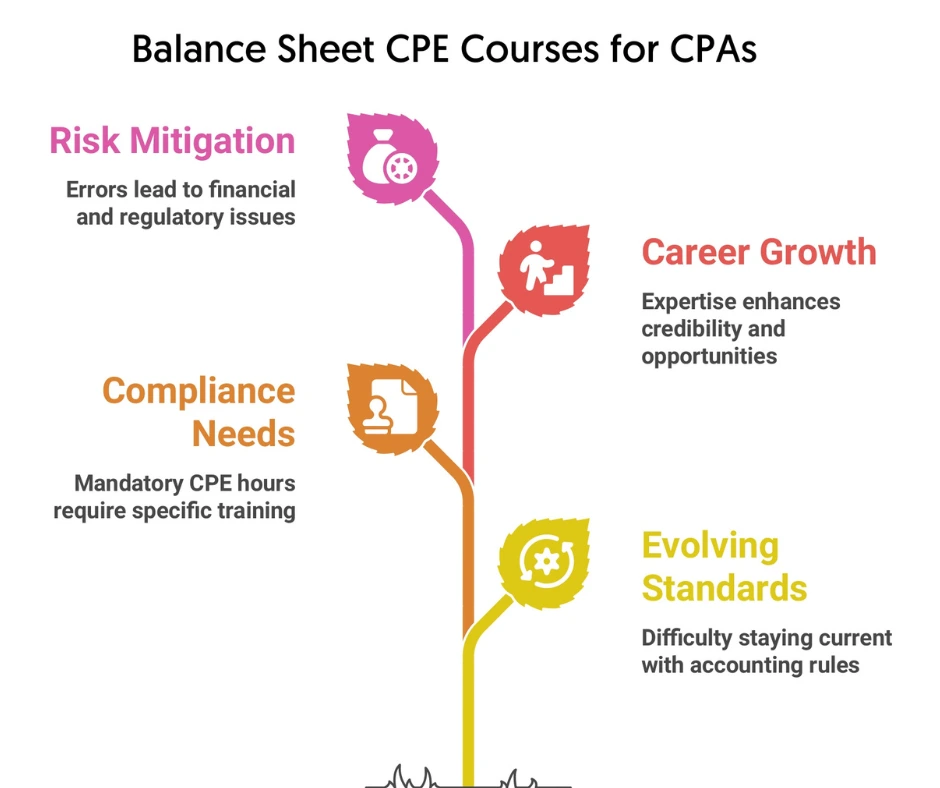
CPE matters a lot for CPAs and other accounting professionals, as it keeps their skills fresh and accelerates career growth. Out of all the areas of study, balance sheet CPE stands out because understanding the balance sheet is fundamental to financial accounting. It shows stakeholders where a company stands financially at a specific time. Knowing how to prepare and analyze it isn't only about ticking compliance boxes; it's also about giving clients helpful advice and helping them make strategic decisions.
Here, we'll dig into what CPE in balance sheet covers, why it's important, and what you can expect to learn. You'll also see its core components and learn why picking a credible CPE provider actually matters.
Balance sheet CPE online or offline programs help accounting professionals earn those important CPE credits while building real skills in analyzing, preparing, and presenting balance sheets. CPE providers, professional associations, and state CPA societies usually offer these programs. You can earn anywhere from 1 to 5 CPE credits (sometimes even more), depending on the course's depth.
Balance Sheet CPE courses have two primary objectives:
If you're working in the accounting field, taking quality CPE courses in the balance sheet is a game-changer. Here's what you get:
The balance sheet isn't just a financial statement; it's a clear overview of a company's financial status. Mess something up when preparing, analyzing, or reporting it, and you risk leading your company or clients astray, sometimes straight into regulatory issues. Good CPE courses sharpen your skills so you're not just compliant, but actually helping your organization or clients stay on track.
CPAs have to rack up a certain number of CPE hours annually, biennially, or triennially. CPE in balance sheet for CPAs makes it easy to hit those numbers, and you'll pick up crucial accounting skills along the way.
In the accounting field, having deep expertise pays off. Professionals who really understand the ins and outs of balance sheets are seen as more credible, and that means faster career growth. Plus, when you know your stuff, you give better advice to employers and clients, which opens doors and sets you up for long-term success.
Balance sheet CPE programs typically cover these topics in detail:
If gaining a strong understanding of these topics seems overwhelming, CPEthink.com is here to help. We have three different balance sheet CPE courses covering all of them in detail. Created by an eminent author, these are available at a price range of $35.95 to $44.95, and provide 4 and 5 CPE credits. Whether you want to master working with balance sheets for accountants or balance sheets for CFOs, these courses are designed to equip you with all the necessary knowledge and skills.
Balance sheet CPE courses are among the most critical learning activities for accounting professionals. However, not all CPE sponsors are created equal. Selecting a reputable balance sheet CPE provider makes sure the education you receive is valuable, accurate, and recognized by your state board of accountancy.
Here's a detailed look at the key reasons.
State boards of accountancy require that active CPAs get a certain number of CPE credits within their CPE reporting periods. Enrolling with a reputable sponsor assures:
Moreover, with a recognized sponsor and proper CPE documentation, you'll most likely be protected in the event of an audit.
Working with balance sheets is challenging, involving several complex aspects. A credible provider makes sure:
Joining a reputable provider signals your commitment to excellence. Employers and clients recognize that:
This credibility typically translates into career advancement, trust in your expertise, and strong client relationships.
Balance sheet CPE requires both time and money. By selecting an adept sponsor, you can rest assured knowing that your:
This page helps CPAs, CFOs, and other accounting professionals who must maintain active licenses and sharpen their expertise in working with balance sheets. It also benefits accounting students and entry-level accountants who want to understand how balance sheet CPE courses strengthen accuracy and decision-making and help maintain compliance.
Misclassification of assets or liabilities, misunderstanding of different components of equity, or failure to perform ratio analysis properly can lead to an inaccurate picture of a company's financial condition. Not only do these errors damage professional credibility, but they may also lead to disciplinary actions from regulatory bodies.
This page solves these problems by:
It also helps you avoid joining unverified CPE providers, which may lead to wasted resources or invalid credits.
Balance sheet CPE courses are relevant throughout your CPA career. However, this page becomes especially relevant during:
It applies to situations where financial reporting of a company is required. For example:
In short, the knowledge gained from this page is applicable across industries and organizational structures.
The balance sheet is one of the most fundamental financial statements. From investors and lenders to regulatory bodies, stakeholders depend on it to evaluate a company's financial stability. So, overlooking the importance of CPE courses in balance sheet may lead to:
The solution lies in selecting and completing quality balance sheet CPE courses. Here's how to do that.
With these steps, you'll remain compliant and have expertise in handling responsibilities related to balance sheets.
In the accounting world, balance sheet CPE is a vital tool for maintaining professional competence. This page helps you understand the full value of investing in quality CPE courses and how they remain a cornerstone of ongoing education. With the information on this page, you'll stay equipped with the knowledge and skills required to thrive in the dynamic accounting environment.

Check out what other customers are saying.






 Login/Register