0

Budgeting CPE Courses for CPAs |
| The Last Self-Study CPE Website You Will Ever Need (Click for Subscriptions) |
This page presents a targeted selection of budgeting-focused CPE courses for accounting and finance professionals who want to strengthen their financial planning and forecasting skills while earning required credits. It helps users quickly identify relevant courses, understand their practical value, and choose flexible online options that support both compliance and real-world decision-making.
1. Who is this list of CPE courses for?This list of CPE courses is designed for finance and accounting professionals, including CPAs, CFOs, and others, who want to deepen their understanding of budgeting practices while meeting continuing education requirements. 2. What is this list of CPE courses about or what problem does this course solve?This list focuses on budgeting, financial forecasting, and planning, helping professionals build effective budgets, improve decision-making, and avoid common issues such as cash flow problems, misallocation of resources, and inaccurate projections. | 3. Why is this list of CPE courses important to a CPA, Accountant, or IRS Enrolled Agent?Because some courses offer IRS credits while others focus on financial and budgeting skills, this list helps professionals maintain compliance, enhance technical expertise, and improve their ability to guide organizations in financial planning and tax-related decisions. 4. When is this list of CPE courses relevant or timely?These courses are especially relevant during fiscal planning periods, license renewal cycles, and times of economic change when businesses must adjust budgets or improve financial strategies. | 5. Where can this list of CPE courses be found and accessed?The courses are available online through CPEthink.com, where users can search, select, and purchase self-study text or video-based CPE courses directly from the platform. 6. How is a list of CPE courses like this consumed or used?Professionals browse the catalog, select relevant courses by topic or credit type, complete them in a self-study or video format, and use the earned credits to satisfy continuing education requirements while improving practical budgeting skills. |
Budgeting sits at the core of every thriving organization. It isn't just number crunching; it's about setting the direction for the company, and helping it grab opportunities when they come up and sidestep unnecessary financial risks.
But let's be honest: the process isn't always smooth sailing. It takes time, patience, and plenty of knowledge. Whether one is building a startup from scratch or steering a large corporation, they'll run into their fair share of budget-related obstacles and questions.
This page is here to help you get all the necessary information regarding the budgeting process to help you master what's required. There are also details on why signing up for budgeting CPE, especially with a legitimate sponsor, can genuinely level up your skills.
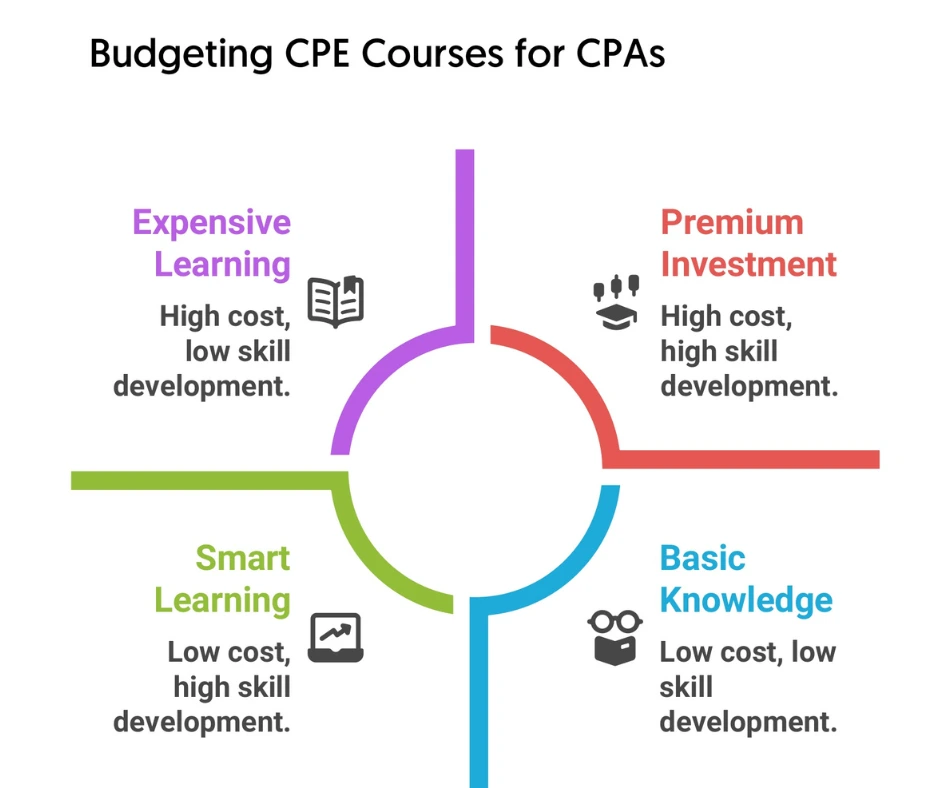
A budge isn't just a pile of financial documents. It's a vital tool for keeping a business on track. Here's what it does for an organization:
Bottom line: a good budget gives a company a solid plan it can adjust when situations change, keeping it in control even when times are tough.
A budget isn't one-size-fits-all, but effective ones usually have a few key components:
What does the organization expect to generate from services or sales of goods? Most look at historical data and market trends to make their guess.
These stay the same whether business performance or sales volume goes up or down. Think rent, salaries, loan repayments, and insurance.
These costs shift depending on production or sales activities. Raw materials, shipping, marketing, and sales commissions, all fall under this group.
A projection of what'll come in and what'll go out, making sure the company always has enough on hand to pay its bills.
What's left over after everything's paid? Profit goals must be realistic and the progress need to be tracked periodically.
The organization's investments in technology, equipment, expansion, etc. to increase its operational capacity. These typically pay off beyond just one particular year.
An emergency cash stash to cover emergencies, unforeseen expenses, or unplanned, urgent needs. Every strong business keeps one.
Furthermore, depending on the company, the budget may also include COGS (Cost of Goods Sold). This covers the direct costs of producing what a company sells, like materials and staff wages, but skips overhead like administration, rent, or marketing.
When you see all these moving pieces, the process might look tough. But with the right budgeting CPE courses, you'll build the skills to manage it all with confidence.
Whether you're thinking about pursuing budgeting CPE online or in-person, the right programs will teach you how to create budgets that actually work. Here's what you'll pick up when you join such programs:
A budget shouldn't just be about limiting spending. It needs to connect to what the organization is really trying to achieve.
The process should involve leaders from operations, sales, marketing, and any other key departments. When they have a say in the process, budgets end up more accurate, and leaders become more committed to hitting their targets because they helped set them.
A company shouldn't just set a budget once and forget about it. It needs to schedule times to review it, maybe every quarter or even monthly. This lets it spot deviations early and tweak things before they turn into big problems.
Plans change, crises happen, and opportunities pop up out of nowhere. A budget that's too rigid will hold the company back. It's important to leave room to adjust.
Things go wrong. By setting aside a portion of the budget for unexpected expenses or shortfalls, the company gives itself breathing room without blowing the whole plan.
Even people with plenty of experience can slip up when it comes to budgeting. That's a key reason why good CPE courses on budgeting matter. They dig into all the little details and show you how to avoid mistakes like these:
It's tempting to create a budget and never look back. But businesses today face constant change. When a company locks itself in with a rigid plan, it's set up for headaches, or worse, it misses out on opportunities because it can't pivot.
Companies should adopt a rolling forecast model. Instead of planning everything annually, it should revisit the numbers every quarter or month. This way, it keeps the plans relevant and responds fast when things shift in the market.
Building a budget on old information or hunches? That approach rarely works. The company gets off course fast and risks major setbacks.
It should review last year's budget to look for problem areas like unexpected costs or missed revenue goals. It needs to pay attention to shifts in the industry and plan for them, so the budget matches reality.
A business might look profitable on paper and still run into cash flow trouble. Too often, companies focus only on revenue and expenses, missing how the money actually moves in and out each month. That's where major mistakes happen.
It should create a comprehensive cash flow forecast that maps out all the money coming in from services or sales, plus what's going out for fixed expenses. Spotting gaps ahead of time gives it a chance to act before cash crunches get out of hand.
In the end, accurate budgeting is key to keeping a business financially healthy. That's why investing in quality CPE in budgeting from a leading sponsor pays off. At CPEthink.com, you'll find a variety of courses on budgeting for accountants looking to sharpen their skills and avoid these common pitfalls.
When it comes to mastering the intricacies of budgeting in a cost-effective manner, joining online programs is your best option. Apart from being affordable, these programs provide ultimate flexibility, helping you learn at your own pace.
Whether you want to master the skills of budgeting for CPAs or budgeting for CFOs, CPEthink.com has you covered. From making better budgeting decisions and learning rolling forecasts to mastering skills in budgeting for profit planning and control and exploring budgeting alternatives, we're here to elevate your competence.
Depending on your course, you'll earn 2.5 to 11 credits within a price range of $22.45 to $97.95.
With the information on this page, you can:
With this information, you can also help organizations that undergo transitions like restructuring, expansion, or mergers.
Budgeting is a practical skill that strengthens organizational success and your career as an accounting or finance professional. By honing your skills through budgeting CPE, not only will you meet your Board's requirements, but you'll also gain the knowledge to drive sustainable financial growth in business environments.

Check out what other customers are saying.





 Login/Register