0

Author: |
Colten Christensen, Author |
Course Length: |
Pages: 34 ||| Word Count: 9930 ||| Review Questions: 3 ||| Final Exam Questions: 5 |
CPE Credits: |
1.0 |
IRS Credits: |
0 |
Price: |
$12.95 |
Passing Score: |
70% |
Course Type: |
Text |
Technical Designation: |
NonTechnical |
Field Of Study: |
Business Management & Organization |
Approved Audience: |
NASBA QAS - NASBA Registry |
Key Takeaways: |
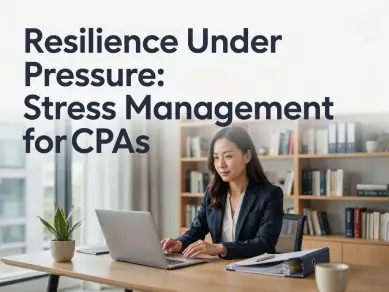
This course teaches practical resilience and stress management strategies that help CPAs maintain performance and sound judgment under pressure.
|
Frequently Asked Questions: |
|
Description: |
CPAs operate in demanding environments marked by tight deadlines, complex regulations, client expectations, and high-stakes decisions. Sustained stress in these conditions can quietly undermine judgment, emotional control, and leadership effectiveness. This course reframes resilience as a professional and leadership competency, one that directly supports decision quality, credibility, and long-term performance in accounting roles. Participants will learn practical strategies to manage stress proactively through cognitive reframing, bounce-back thinking, and daily resilience habits tailored to accounting environments. Using real-world scenarios from audit, tax, advisory, and leadership settings, the course demonstrates how resilient behavior strengthens composure under pressure, improves team dynamics, and preserves professional judgment during peak workload periods. By the end of the course, CPAs will be better equipped to lead steadily, respond constructively to challenges, and sustain effectiveness in high-pressure engagements. |
Usage Rank: |
16667 |
Release: |
2026 |
Version: |
1.0 |
Prerequisites: |
None. |
Experience Level: |
Overview |
Additional Contents: |
Complete, no additional material needed. |
Additional Links: |
Internal: Business Management and Organization CPE Courses for CPAs
Internal: Management Services CPE Courses for Leadership and Advisory Skills
External: Stress management
External: Stress Testing: Techniques, Purpose, and Real-World Examples
|
Advance Preparation: |
None. |
Delivery Method: |
QAS Self Study |
Intended Participants: |
Anyone needing Continuing Professional Education (CPE). |
Revision Date: |
04-Jun-2026 |
NASBA Course Declaration: |
Participants must complete the final examination within one year of purchase and with a minimum passing grade of 70% or better to receive CPE credit unless otherwise noted on the Course History page (i.e. California Ethics must score 90% or better). After logging in click on the Course History links on your My Courses page for the Begin date and Expire date for the Final Exam. |
Keywords: |
Resilience Under Pressure: Stress Management for CPAs - CPE course |
Learning Objectives: |
Course Learning Objectives At the end of this course, students will be able to:
|
Course Contents: |
Chapter 1 - Resilience Under Pressure: Stress Management for CPAs Course Learning Objectives Introduction The Neuroscience of Stress What Happens in the Brain During Stress The Cortisol Curve The Role of the Nervous System How Stress Undermines Emotional Intelligence Why This Knowledge Matters for CPAs Common CPA Stressors Ambiguity: Navigating Uncertainty in Accounting Overload: The Weight of Too Much Conflict: The Human Side of Professional Pressure The Compounding Effect in Accounting Practice Why Recognizing These Stressors Matters for CPAs Cognitive Reframing and Bounce-Back Thinking What Is Cognitive Reframing? Why Reframing Matters for CPAs What Is Bounce-Back Thinking? Techniques to Practice Reframing and Bounce-Back Thinking Real-World Example: Reframing Under Pressure in Accounting Reframing Builds Resilience Daily Resilience Habits Key Categories of Daily Resilience Habits Why it Works Professional Leadership in Practice Glossary |






 Login/Register