0

Author: |
Colten Christensen, Author |
Course Length: |
Pages: 78 ||| Word Count: 32,781 ||| Review Questions: 15 ||| Final Exam Questions: 25 |
CPE Credits: |
5.0 |
IRS Credits: |
0 |
Price: |
$44.95 |
Passing Score: |
70% |
Course Type: |
Text |
Technical Designation: |
Technical |
Field Of Study: |
Accounting |
Approved Audience: |
NASBA QAS - NASBA Registry |
Key Takeaways: |
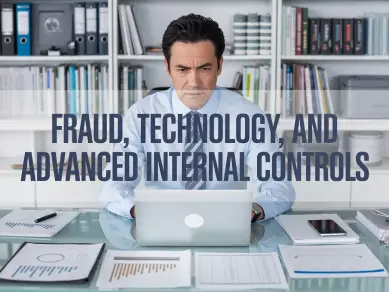
This course focuses on how fraud occurs and how effective internal controls enhanced by modern technology can prevent, detect, and mitigate fraud risks.
|
Frequently Asked Questions: |
|
Description: |
Fraud remains a significant risk for organizations, often leading to financial losses, reputational damage, and regulatory consequences when internal controls are weak or ineffective. For accounting and finance professionals, understanding how fraud occurs—and how strong internal controls help prevent and detect it—is essential to protecting organizational assets and maintaining reliable financial reporting. CPAs frequently play a central role in evaluating control environments, identifying risk factors, and recognizing warning signs that may indicate fraudulent activity. This course examines the relationship between fraud risk and internal controls, focusing on how organizations design control systems to reduce opportunities for fraud and detect irregularities. Participants explore common fraud schemes such as cash skimming, billing fraud, payroll manipulation, expense reimbursement fraud, and financial statement fraud, while also learning to identify control weaknesses and warning signs such as lack of segregation of duties, missing documentation, and management override of controls. The course also addresses the growing role of technology in modern internal control environments. Topics include IT general controls, application controls, automation, continuous monitoring, and the use of technology in fraud detection. Participants will also explore control considerations related to cloud-based systems, third-party service providers, and vendor risk management, helping them better evaluate and strengthen internal control systems in today’s increasingly digital financial environment. |
Usage Rank: |
68000 |
Release: |
2026 |
Version: |
1.0 |
Prerequisites: |
None. |
Experience Level: |
Overview |
Additional Contents: |
Complete, no additional material needed. |
Additional Links: |
Internal: Internal Controls in Accounts Payable (course on fraud‑resistant AP control design)
Internal: Vendor Issues in Accounts Payable (course on identifying clues to detect fraudulent invoices)
External: PCAOB Auditing Standard AS 2401 - Consideration of Fraud in a Financial Statement Audit (guidance on auditor responsibilities in fraud detection)
External: Accounts payable
|
Advance Preparation: |
None. |
Delivery Method: |
QAS Self Study |
Intended Participants: |
Anyone needing Continuing Professional Education (CPE). |
Revision Date: |
28-Apr-2026 |
NASBA Course Declaration: |
Participants must complete the final examination within one year of purchase and with a minimum passing grade of 70% or better to receive CPE credit unless otherwise noted on the Course History page (i.e. California Ethics must score 90% or better). After logging in click on the Course History links on your My Courses page for the Begin date and Expire date for the Final Exam. |
Keywords: |
Fraud, Technology, and Advanced Internal Controls - CPE course for CPAs |
Learning Objectives: |
Course Learning Objectives By the end of this course, participants will be able to:
|
Course Contents: |
Chapter 1 - Fraud, Technology, and Advanced Internal Controls Course Learning Objectives Fraud Risk and Internal Controls Internal Controls and Fraud Prevention Fraud Triangle How Weak Controls Create Opportunity Role of Tone at the Top Common Fraud Schemes Cash Skimming Billing Schemes Payroll Fraud Expense Reimbursement Fraud Financial Statement Fraud Control Red Flags Lack of Segregation of Duties Missing Documentation Unreviewed Journal Entries Override of Controls Rapid Growth Without Control Updates Technology and Modern Internal Controls IT General Controls (ITGCs) Access Controls Change Management Data Backup and Recovery System Security Application Controls Input Controls Processing Controls Output Controls Automation and AI in Internal Controls Automated Approval Workflows Continuous Monitoring Exception Reporting Audit Trails Risks of Overreliance on Automation Internal Controls in Remote and Cloud Environments Cloud Accounting Systems User Permissions SOC 1 Reports Vendor Risk Management Glossary |





 Login/Register