0

Utah Board of Accountancy | CPA Requirements |
| The Last Self-Study CPE Website You Will Ever Need (Click for Subscriptions) |
This page explains the Utah Board of Certified Public Accountancys biennial CPE requirements, helping Utah CPAs understand the ethics credit rules, carry forward limits, and reciprocity guidelines needed for license renewal.
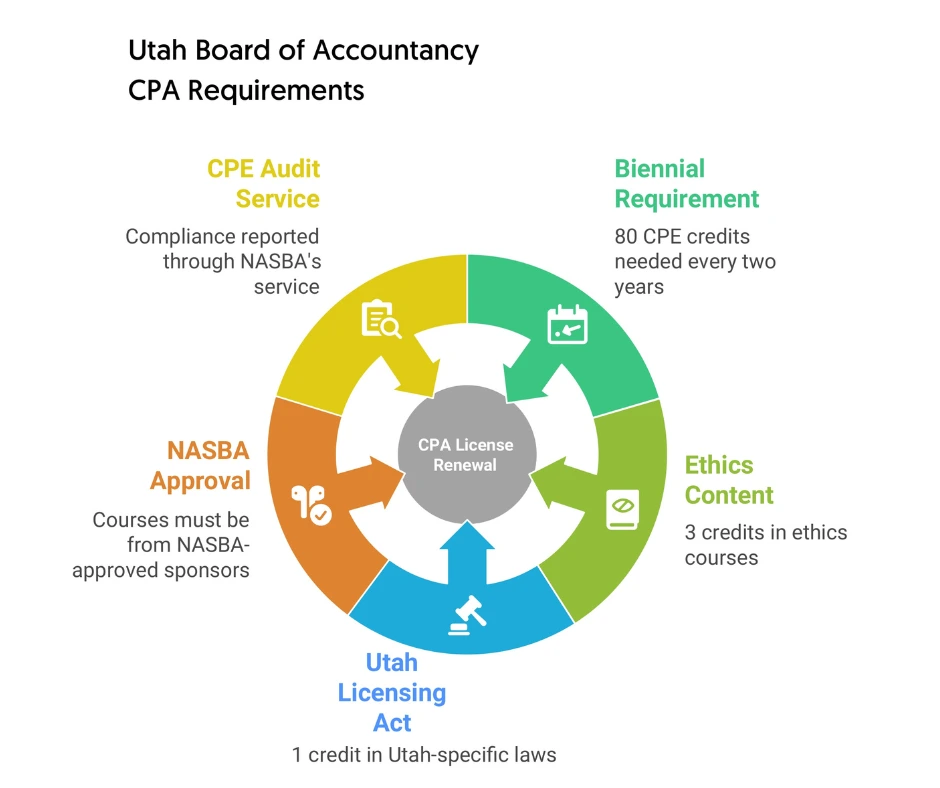
In Utah, trust in financial reporting and ethical conduct is safeguarded by the Utah Board of Certified Public Accountancy. It's the state's regulatory authority for CPAs and public accounting firms.
In short, the Utah Board of Accountancy ensures that CPAs are more than just number-crunchers; they're professionals committed to maintaining the highest standards of competence, integrity, and accountability.
If you're a Utah CPA with an active license, this page is for you. Here, we'll thoroughly discuss all Utah CPE requirements. This, in turn, will help you have an effective and rewarding learning experience, expediting your professional growth.
Be sure to abide by these guidelines to experience a hassle-free Utah CPA license renewal process.
If your principal place of business is outside Utah, then you need to comply with these Utah CPE requirements CPA:
It helps CPAs, CPA firms, and the public at large.
With a deep understanding of the Utah CPE requirements set forth by the Board, you can address the challenges of:
This information is relevant at every stage of your career as a CPA. You can use it:
This information primarily applies to Utah, as the Utah Board of Certified Public Accountants is the regulatory authority here. This is because:
You should care because:
This page gives you a clear roadmap for all your Utah CPE requirements. Just make sure that you:
Additionally, visit the FAQs and CPA CPE FAQs pages for further information on the requirements.
The Utah Board of Certified Public Accountancy stands as more than a regulatory authority; it's the guardian of integrity and trust in the state's financial profession. By setting rigorous CPE requirements, enforcing accountability, and protecting the public interest, it ensures that CPAs are not only competent, but also always maintain ethical conduct. In short, its oversight empowers you to remain a dependable financial advisor throughout your CPA career.

Check out what other customers are saying.





 Login/Register